Compression Socks 101



If your doctor just told you to “get some compression socks” and you left the appointment with more questions than answers, you’re not alone. Here’s everything you need to know, explained simply.
What Are Compression Socks?
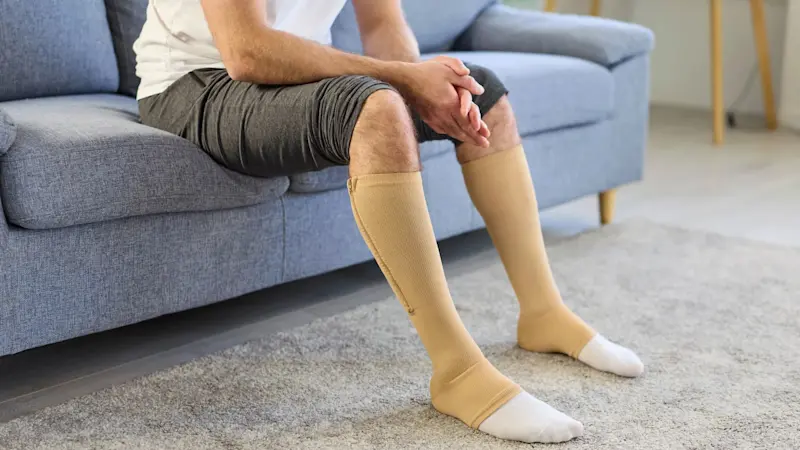
Compression socks are snug-fitting socks or stockings designed to gently squeeze your legs. Unlike regular socks, they’re tighter at the ankle and gradually looser as they go up your leg. That gentle, graduated squeeze is the whole point — it’s not just a tighter sock, it’s a tool that helps your body move blood more efficiently.
How Do Compression Socks Work?
Every time your heart beats, it pumps blood down to your legs. Getting that blood back up to your heart is harder work, especially if you sit or stand for long periods, have circulation issues, or are less mobile than usual (like after surgery or during pregnancy).
Compression socks help by:
Squeezing your leg veins so blood has less room to pool and is pushed upward more easily
Supporting your calf muscles, which normally act like a pump to move blood back to your heart
Reducing swelling by keeping fluid from building up in your lower legs and ankles
Improving blood flow to prevent clots from forming in veins that aren’t moving blood well
Who Needs Compression Socks?
Doctors commonly recommend them for people who:
Sit or stand for long stretches (nurses, teachers, office workers, frequent flyers)
Are recovering from surgery, especially orthopedic or vascular procedures
Are pregnant, since swelling and vein pressure increase
Have varicose veins or chronic venous insufficiency
Have a history of blood clots (like deep vein thrombosis) or are at higher risk of one
Experience leg swelling, heaviness, or aching by the end of the day
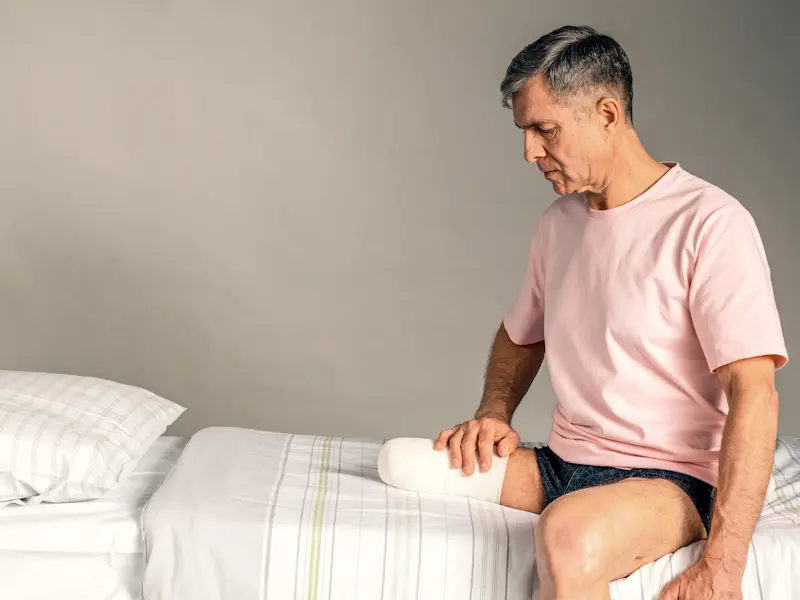
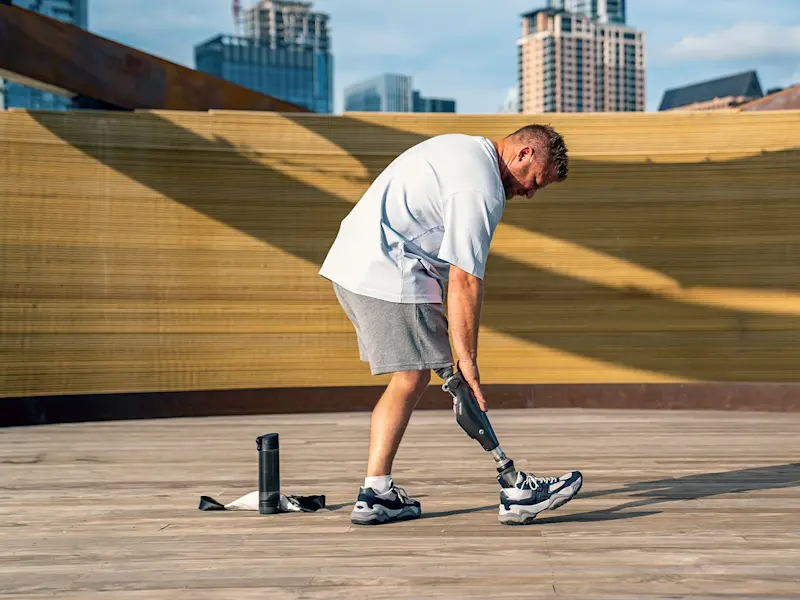
Use a prosthetic limb and need help managing residual limb swelling and shape after amputation
Are managing lymphedema, including lymphedema related to breast cancer treatment, which often requires custom-fitted compression garments
Understanding Compression Socks (mmHg)
Compression is measured in millimeters of mercury (mmHg) — the same unit used for blood pressure. The number tells you how much pressure the sock applies at the ankle.
Compression Level | Typical Use |
|---|---|
8–15 mmHg | Mild, everyday tiredness or minor swelling; available without a prescription |
15–20 mmHg | Long flights, pregnancy, standing jobs, mild varicose veins |
20–30 mmHg | Moderate varicose veins, post-surgery recovery, noticeable swelling (often needs a doctor’s recommendation) |
30–40 mmHg | Significant venous issues, clot prevention, more advanced swelling (prescription-strength, fitted by a professional) |
40+ mmHg | Severe medical conditions, used under close medical supervision |
Not sure which level you need? This is the one detail worth getting from your doctor directly — the right pressure depends on your specific condition, and too much or too little won’t do the job. For 20 mmHg and above, a professional fitting makes a real difference in comfort and effectiveness — Ottobock Care’s certified fitters specialize in medical-grade compression garments for lymphedema, venous disease, and post-surgical recovery.
How to Choose the Right Size
A compression sock that doesn’t fit properly can be uncomfortable or even counterproductive. To find your size:
Measure your ankle circumference at the narrowest point, usually just above the ankle bone
Measure your calf circumference at the widest point
Measure your leg length from the floor to just below your knee (for knee-high) or to your upper thigh (for thigh-high)
Check the brand’s sizing chart — sizing varies between manufacturers, so don’t assume your regular sock size applies
If you’re between sizes, sizing up usually feels more comfortable, but check the manufacturer’s guidance, since fit affects how well the compression works.
How to Put On Compression Socks
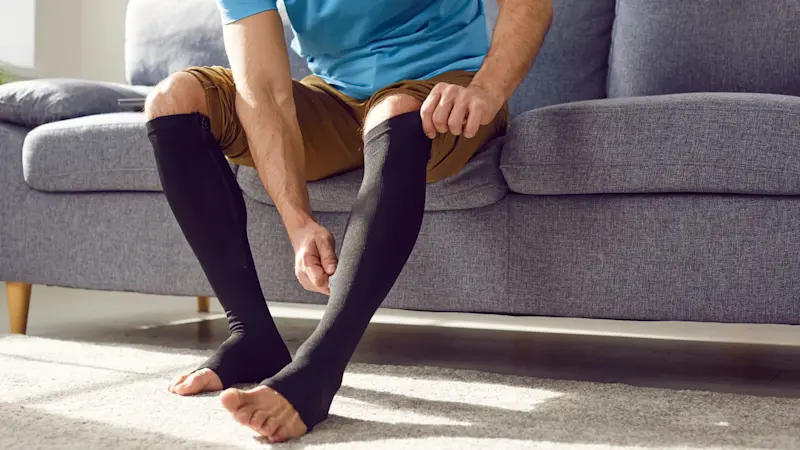
Compression socks are noticeably harder to put on than regular socks — that’s normal, not a sign you have the wrong pair.
Put them on first thing in the morning, before swelling builds up during the day
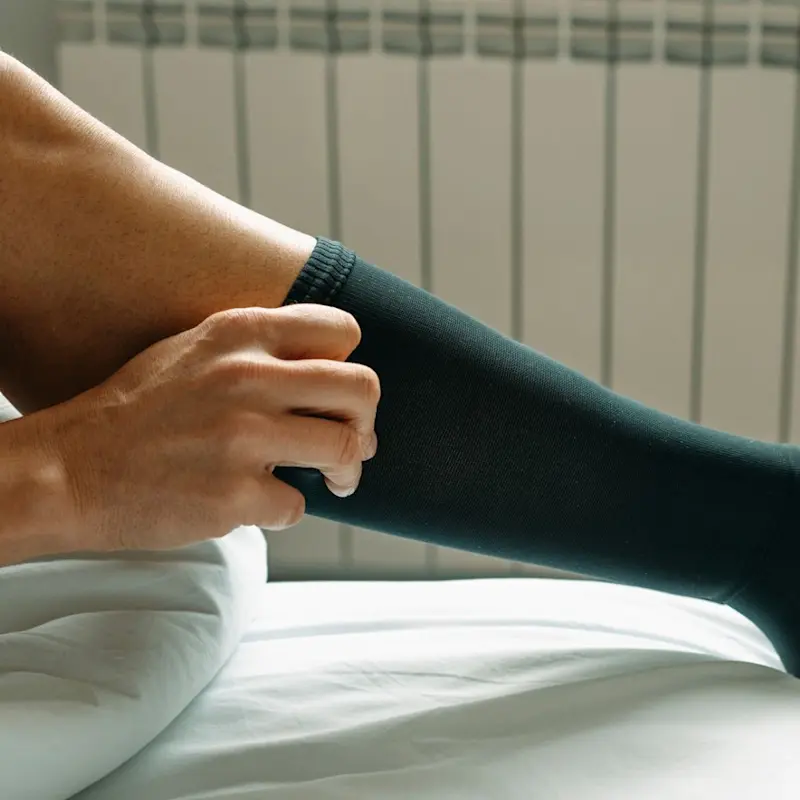
Turn the sock inside-out down to the heel, then ease your foot in before rolling the rest up your leg
Smooth out any bunching or wrinkles, since folds can dig in and restrict circulation instead of helping it
Rubber gloves or a donning aid (a sleeve-like tool) can make this much easier, especially for stiff joints or limited hand strength
Caring for Your Compression Socks
Hand wash or use a gentle machine cycle in cool water
Air dry — heat from a dryer breaks down the elastic fibers faster
Replace them every 3–6 months, since compression fabric loses its stretch over time even if it looks fine
Frequently Asked Questions
When to Talk to Your Doctor
Reach out to your healthcare provider if you notice:
Numbness, tingling, or color changes in your toes
Increased pain or swelling despite wearing your socks
Skin breakdown, sores, or irritation where the sock sits
Uncertainty about what compression level or size is right for you
If you’d like a professional fitting or want to talk through which compression level is right for your condition, you can find an Ottobock Care clinic near you. And if any of the terms in this article were new to you, our glossary of orthotic and prosthetic terms can help fill in the gaps.
This article is for general educational purposes and isn’t a substitute for advice from your doctor or prosthetist. Always follow the specific guidance you’ve been given for your condition.