Is the Viral C-Brace Video Real?
No, the Video Isn't Fake. Here's the Science Behind What You're Seeing.
If you've ever watched a before-and-after video of a patient with a mobility condition and thought, "That can't be real," you're not alone. We see this reaction all the time in comment sections, and honestly? It makes complete sense.
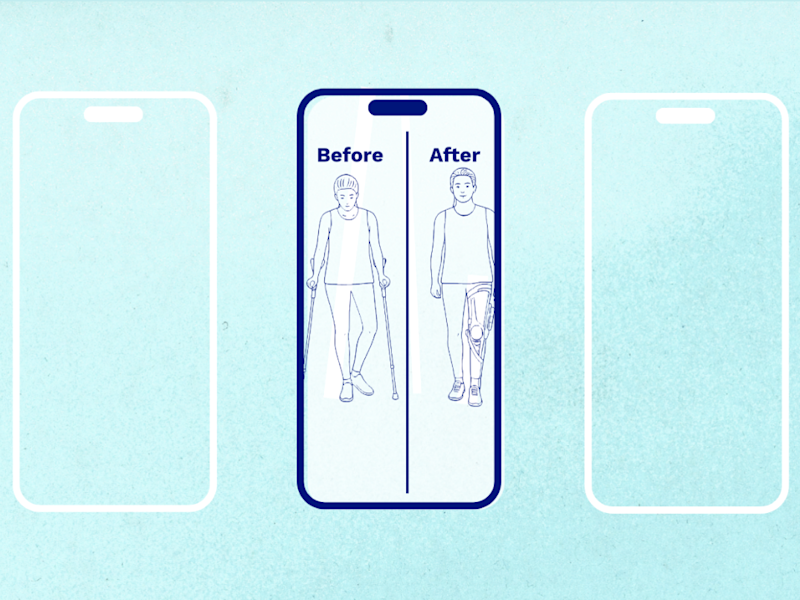
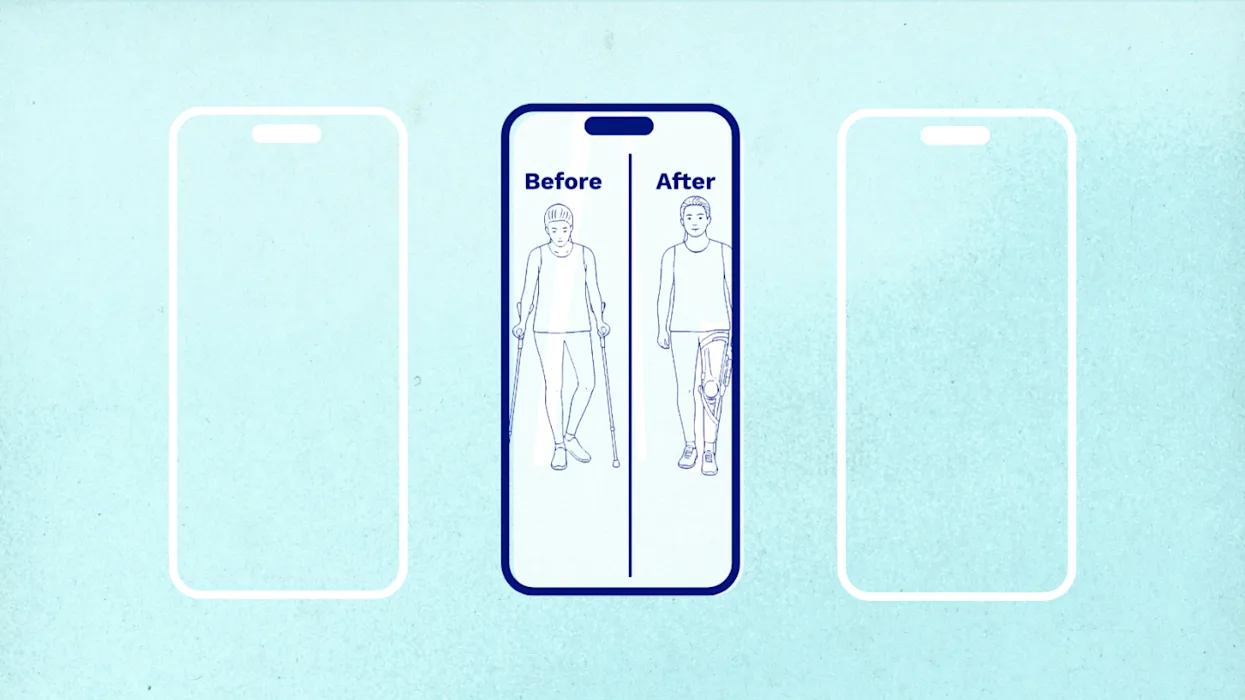
The ‘before’ video shows someone struggling to walk; both legs appear unsteady and wobbly. Then in the after video, they're wearing an Ottobock C-Brace on just one leg, and suddenly both legs look stronger and more controlled. The skeptic in you fires up: How does a brace on one leg fix both legs? Is this edited? Is that even a real patient?
We get it. It does look almost too good to be true. But there's a well-documented biomechanical reason for what you're seeing, and once you understand it, the transformation makes complete sense.
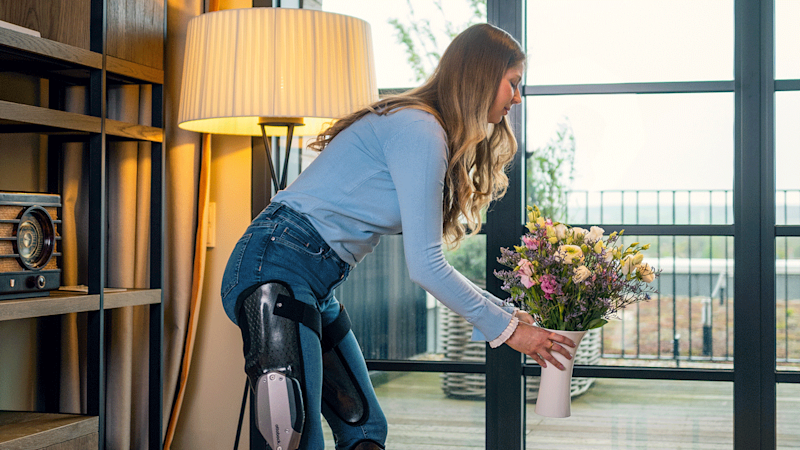
Your Body Doesn't Walk in Isolated Legs
Here's the thing most people don't realize: walking is a full-body, deeply interconnected activity. Your brain, spine, hips, knees, ankles, and feet are constantly communicating with each other dozens of times per second to keep you upright and moving forward. When one part of that system fails (say, a weakened ankle or a neurological condition that disrupts signals to the lower leg) the body doesn't just "break" on that side and leave the other side unaffected. Instead, it does something remarkable: it compensates. Every other part of the body quietly reorganizes itself to try to keep you moving.
This is called compensatory gait, and it's one of the most important concepts in rehabilitation medicine and one of the least understood by the general public. When one leg is struggling, the other leg doesn't simply carry on normally. It overworks, overreaches, and overcompensates; and over time, that shows up visibly in how a person walks.
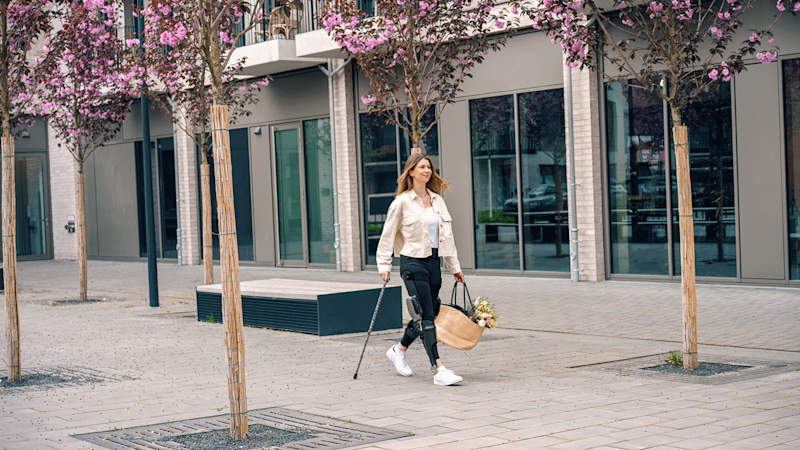
Why the 'Good' Leg Looks Just as Affected
When one leg struggles, whether due to drop foot, neurological weakness, or another condition, the so-called "good" leg takes on an enormous extra burden. It doesn't just support its own side of the body; it also must compensate for the timing, momentum, and stability deficits on the affected side.
In practice, the unaffected leg often develops an exaggerated step pattern (swinging wider, landing harder, or moving in a jerky, irregular rhythm) to counteract what's missing on the other side. The hips may hike up or tilt. The trunk may sway side to side. Even the arms adjust their swing to maintain balance. Over time, these compensations become habitual. That's exactly what you're seeing in those "before" videos: not just one weak leg, but a whole-body movement pattern shaped around that weakness.
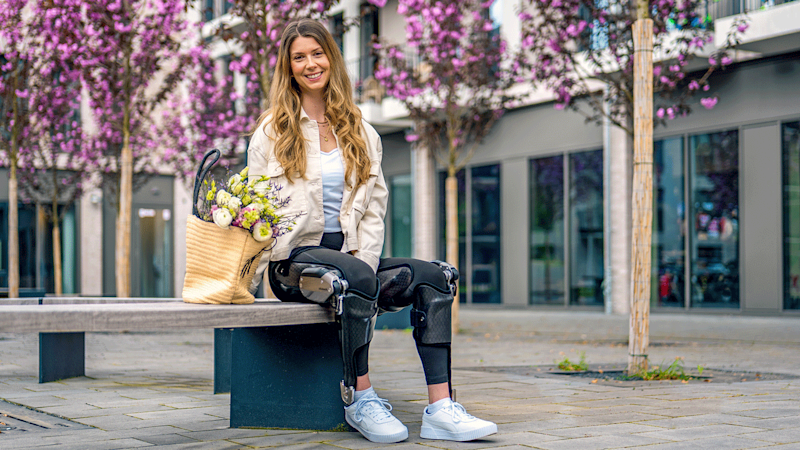
So, What Happens When You Support the Affected Side?
When a well-fitted orthotic brace, like the Ottobock C-Brace we’re seeing in those viral videos, restores stable, controlled movement to the affected leg, the entire system recalibrates. The "good" leg no longer needs to overcompensate. It can return to a more natural, efficient stride pattern because the work is now being shared evenly again. The hips level out, the trunk stabilizes, and the arm swing normalizes.
The brace is only on one leg, but because the whole body was compensating for that one leg, the whole-body benefits from restoring it. You're not seeing two problems fixed; you're seeing one problem resolved and its ripple effects throughout the gait system disappearing along with it.
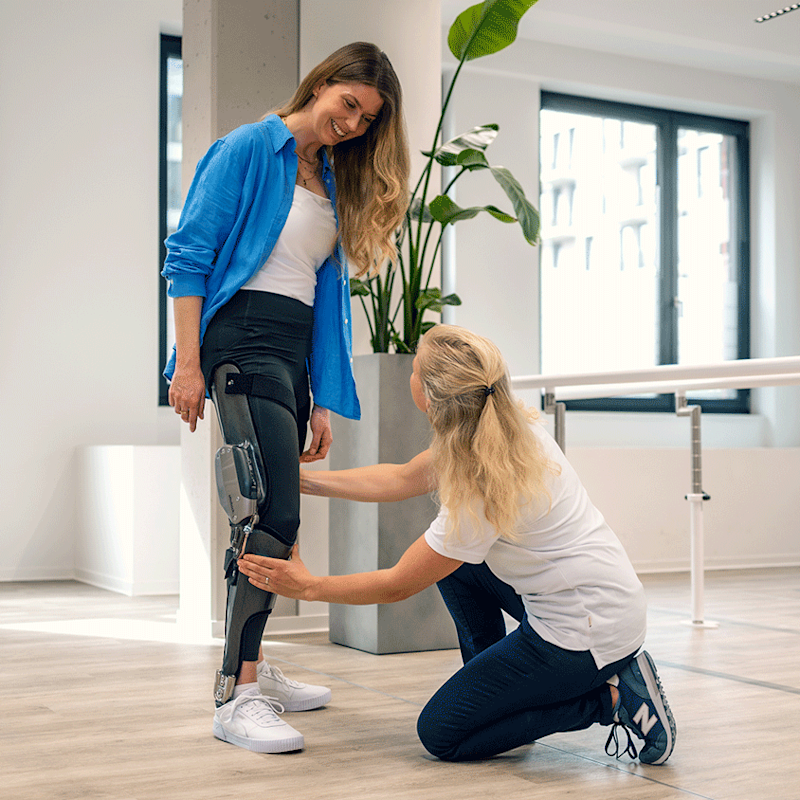
Still Have Questions? You're in the Right Place.
If you're watching these videos because someone in your life is struggling with movement, or because you are, we see you. And we know that behind every skeptical comment is often a person quietly hoping the answer is real. Hoping that this kind of transformation is possible for them, or for someone they love.
It can be. And you don't have to figure it out alone.
Our Ottobock Care orthotists aren't just clinicians. They're guides through one of the most confusing and emotionally demanding journeys a person can face. They've sat across from patients and families at every stage of this process: the denial, the research rabbit holes, the cautious hope, the breakthroughs. They've heard every question, including the ones that feel too basic or too scared to ask out loud.
Whether you want to understand biomechanics better, find out if a device like this could help in your specific situation, or simply talk to someone who has been in this world for years, they're here for all of it. No pressure. Just honest answers from people who genuinely care about getting you to the right place.
Reach out to our team anytime. Because the best next step is always an informed one.