Understanding Prosthetic Leg Costs



Prosthetic Leg Cost Factors and Components
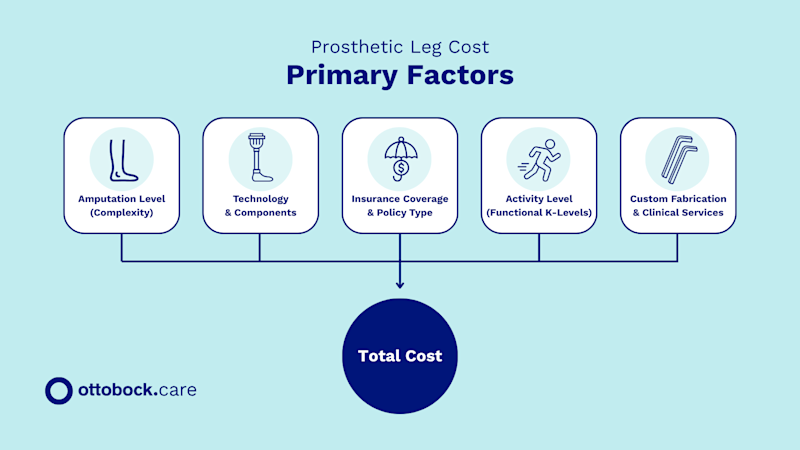
Prosthetic leg costs are highly variable and determined by a combination of medical complexity, technological integration, and insurance structures. Rather than a fixed retail price, costs reflect a personalized medical solution tailored to an individual's "K-Level" (functional mobility) and amputation site.
Primary Cost Drivers
Amputation Level: Above-knee (transfemoral) systems are more expensive than below-knee (transtibial) due to the requirement of prosthetic joints.
Component Technology: High-cost variables include microprocessor knees (MPKs) and energy-returning carbon fiber feet versus basic mechanical components.
Service Bundle: Total costs include professional clinical labor, custom socket fabrication, gait training, and long-term maintenance.
Insurance and Financial Access
Coverage: Out-of-pocket expenses are dictated by deductibles and co-insurance (often an 80/20 split).
Medical Necessity: Insurance approval requires specific documentation of functional goals and lifestyle requirements.
Replacement Cycle: Standard replacement typically occurs every 3–5 years depending on wear and physiological changes.
If you're researching prosthetic leg prices, you're likely facing one of life's most challenging transitions. Whether you're preparing for an amputation, supporting a loved one, or exploring your options after limb loss, understanding the financial aspect of prosthetic care is an important part of your journey.
The honest answer to “what is the cost of a prosthetic limb?” is that it varies significantly based on your unique circumstances. While we can't quote you a specific price without understanding your needs, we can help you understand what influences prosthetic costs and how to navigate the process of getting the care you deserve.
Why Prosthetic Leg Prices Vary So Much
Unlike buying a car where you can compare model prices, prosthetic limbs are highly personalized medical devices. Think of your prosthesis as a custom tool designed specifically for your body, lifestyle, and goals.
Several key factors influence the final cost:
Your activity level and lifestyle goals play perhaps the biggest role. Someone who wants to walk around their home has different prosthetic needs than someone training for a marathon or returning to construction work. More advanced components that enable higher activity levels typically cost more, but they're also designed to help you achieve specific functional goals.
The type of amputation affects both the complexity of the prosthetic system and the number of components required. A below-knee (transtibial) prosthesis generally costs less than an above-knee (transfemoral) prosthesis because it requires fewer components and joints. The level and condition of your residual limb also impact the socket design and fitting process.
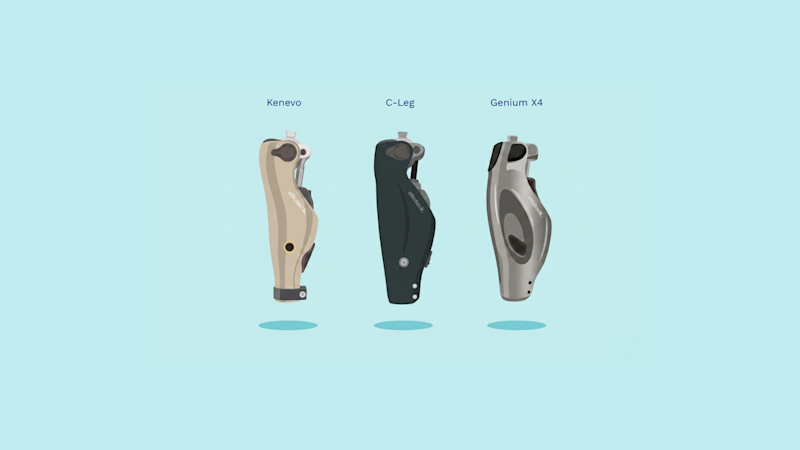
Technology and component selection create significant price variation. Microprocessor-controlled knees that adjust to your walking speed and terrain cost more than mechanical knees, but they can dramatically improve safety and reduce the energy you expend while walking. Similarly, advanced feet that provide energy return or adapt to different surfaces come at different price points than basic models.
Insurance coverage is often the most impactful factor in what you'll actually pay out of pocket. Insurance policies vary widely in their prosthetic coverage, including what components they'll approve, how often they'll cover replacements, and what your deductible and co-insurance amounts are.
Initial fitting versus replacement costs differ because your first prosthesis requires extensive evaluation, custom socket fabrication, multiple fittings, and training. Replacement limbs may cost less if your residual limb is stable and you're upgrading or replacing worn components.
What's Included in Prosthetic Leg Costs?
When clinics talk about prosthetic costs, they're typically referring to more than just the physical leg itself. A complete prosthetic care package usually includes:
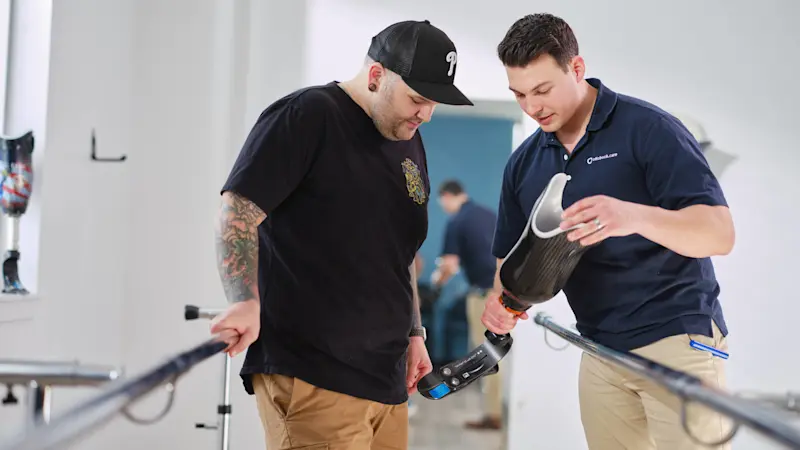
Comprehensive evaluation by an ABCOP or BOC certified prosthetist (CP or CPO) to assess your needs, goals, and physical condition
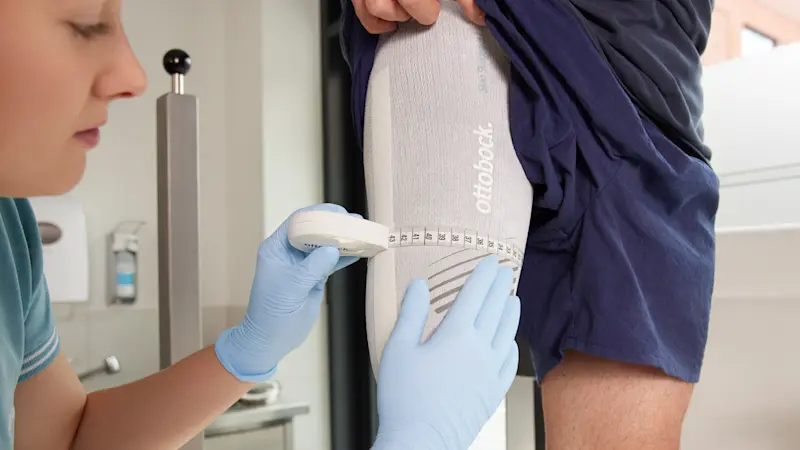
Custom socket fabrication molded specifically to your residual limb for comfort and function
Prosthetic components including the foot, pylon, knee (for above-knee amputations), and suspension system
Multiple fitting appointments to ensure proper alignment and comfort
Gait training to help you learn to use your prosthesis effectively
Follow-up adjustments as your body adapts and your residual limb changes shape
Ongoing maintenance and minor repairs during the warranty period
Quality prosthetic care is a relationship, not a transaction. Your Ottobock Care prosthetist becomes a long-term partner in your mobility journey, providing adjustments, addressing issues, and helping you adapt as your needs change over time.
The Insurance Navigation Process
Most people obtain their prosthetic legs through insurance coverage, whether that's private insurance, Medicare, Medicaid, Veterans Affairs, or workers' compensation. Each insurance type has its own coverage policies, approval processes, and documentation requirements.
Insurance companies typically require medical documentation demonstrating that a prosthesis is medically necessary, and that the specific components requested are appropriate for your condition and functional goals. This is where working with an experienced prosthetic clinic becomes invaluable—we handle the complex insurance paperwork, prior authorization requests, and appeals if needed.
Your costs depend on your insurance plan. Most plans require you to pay a deductible first. After that, many cover about 80% of the cost for prosthetics, so you would pay the remaining 20%. Some plans may have different rules, so check your plan details to know exactly what you’ll owe.
Example:
Allowed amount for prosthetic: $5,000
Deductible: $1,000 (you pay this first)
Remaining amount: $4,000
Insurance covers 80%: $3,200
You pay 20%: $800
Total you pay: $1,800
It's also important to understand that insurance policies often specify how frequently they'll cover prosthetic replacements—typically every 3-5 years, though this can vary based on medical necessity and wear patterns.

Long-Term Considerations
When evaluating prosthetic costs, it's worth considering the total cost of ownership over time. A prosthetic leg isn't a one-time purchase but rather an ongoing investment in your mobility and quality of life.
Prosthetic limbs require regular maintenance, periodic socket replacements as your residual limb changes, and eventual component replacement due to wear. More durable, higher-quality components may cost more initially but could require less frequent replacement and provide better long-term value.
Your lifestyle and activity level also affect longevity. If you're very active, components will wear faster. However, choosing appropriate components for your activity level can actually reduce injury risk and maintain your mobility longer, potentially saving money on medical care down the road.
Making Informed Decisions About Your Prosthetic Care
Given the complexity of prosthetic pricing, the best approach is to have a detailed conversation with a prosthetist, or an Ottobock Care Clinical Liaison, about your specific situation. During this consultation, you can discuss your functional goals, lifestyle needs, insurance coverage, and budget concerns to develop a realistic plan.
At a quality prosthetic clinic like Ottobock Care, you should expect transparency about costs, honest discussions about what your insurance is likely to cover, and creative problem-solving to help you access the care you need. We believe everyone deserves quality prosthetic care regardless of their financial situation, and we work with patients to explore all available options.
Some questions to ask during your consultation:
What prosthetic components do you recommend for my activity level and why?
What will my insurance likely cover, and what might I need to pay out of pocket?
Are there alternative component options at different price points that could meet my needs?
What's included in the initial cost, and what might require additional payment?
How often will I need socket replacements or component replacements?
What payment plans or financial assistance options are available?
Get Personalized Information
While general information about prosthetic leg prices is helpful, the most valuable information is specific to your unique situation. Your amputation level, health status, functional goals, insurance coverage, and lifestyle all contribute to what your prosthetic care will look like and cost.
The Ottobock Care prosthetics team specializes in creating personalized solutions that help you achieve your mobility goals. We work with all major insurance providers and have extensive experience navigating the coverage and approval process.
We invite you to connect with our team for a conversation about your specific needs. We can review your insurance coverage, discuss your goals, and provide you with realistic information about what to expect—including costs, timeline, and the fitting process.
Ready to get specific answers about your prosthetic options? Use the form below to connect with our prosthetics team. We'll schedule a consultation to discuss your unique situation and help you understand exactly what your path forward looks like.
Your mobility journey is important to us, and we're here to support you every step of the way.
Understanding Prosthetic Leg Costs: What You Need to Know
Ottobock Care is committed to providing quality prosthetic care with transparency, compassion, and expertise. Our certified prosthetists work with patients of all activity levels and insurance situations to ensure everyone can access the prosthetic care they need.